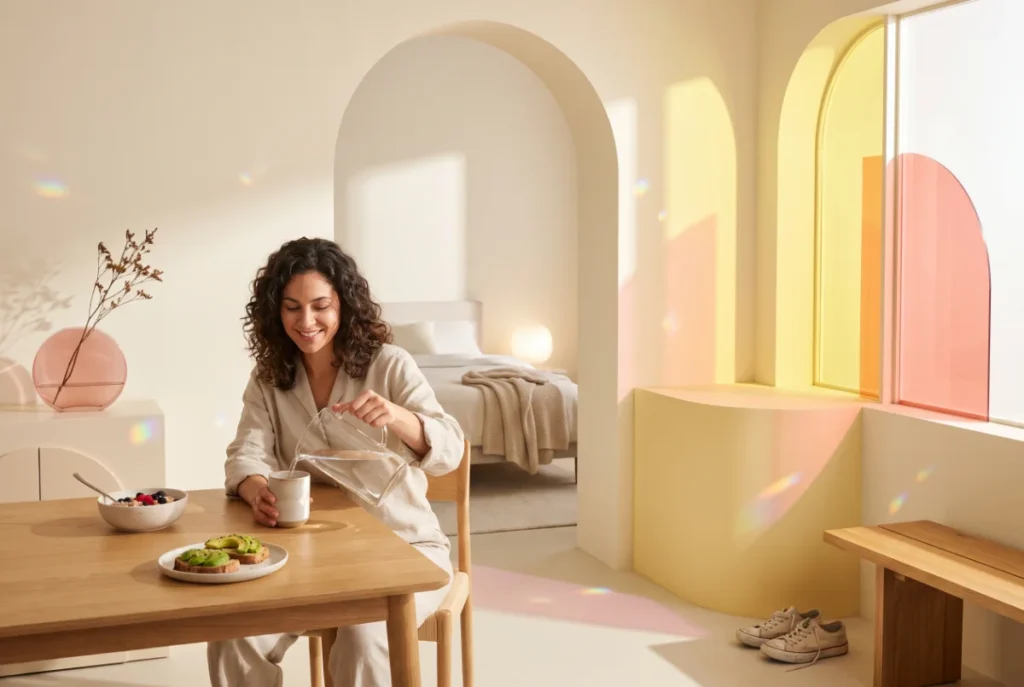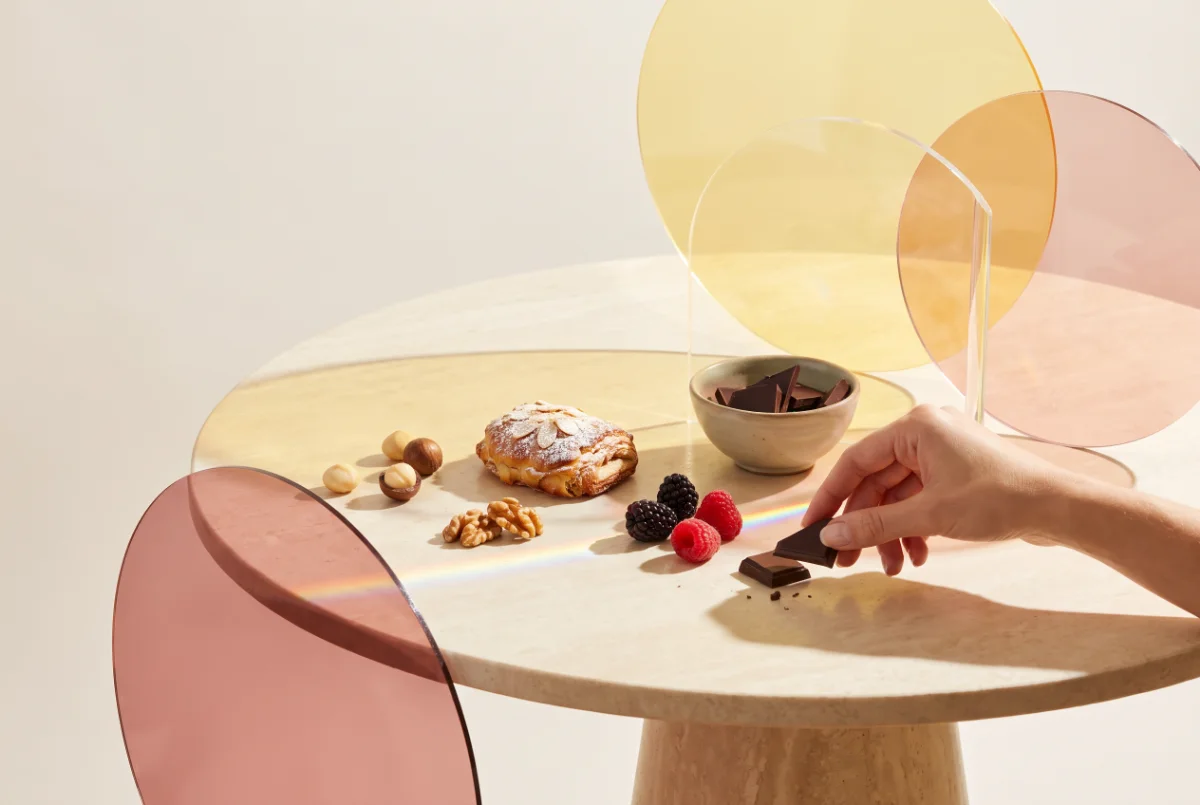
A week before your period, chocolate is calling your name. And then comes the guilt. Cravings before your period aren’t a character flaw: they’re your body’s response to specific hormonal changes. Understanding this lets you take care of yourself more kindly and with strategies that actually work.
- In the luteal phase, appetite and sugar cravings increase due to hormonal and serotonin changes and a slight rise in energy expenditure.
- Restricting yourself worsens the craving-guilt cycle; eating on schedule with protein and fiber calms it.
- If you feel a loss of control when eating or intense guilt, talk to a professional.
In this article12 sections
- What happens in your body in the luteal phase
- Why restricting yourself doesn’t help
- Strategies that actually work
- How to build a plate that keeps you full
- Sweet, salty, chocolate: what’s usually behind it?
- What to do when a craving hits
- Myths about cravings
- Luteal-phase checklist
- How Aurah can support you
- When to see
- In summary
- FAQ
What happens in your body in the luteal phase
- Hormonal changes: after ovulation, progesterone rises and, toward the end, estrogen and progesterone drop. These shifts influence the signals that regulate hunger and fullness.
- Serotonin: as estrogen drops, serotonin may decrease, and your brain “asks” for carbs, which help produce it; that’s why cravings tend to be for sweets and refined flours.
- More energy expenditure: some studies show that resting metabolism rises slightly in this phase, so your body may ask for a little more food.
- Sleep and stress: poor sleep increases hunger and cravings; in the luteal phase sleep tends to be more fragile, as we saw in why you sleep differently in each phase of your cycle.
It’s part of the set of luteal-phase changes we explain in the hormonal guide to the menstrual cycle.
Why restricting yourself doesn’t help
Forbidding yourself sweets tends to increase cravings and lead to overeating later, with guilt. That reinforces a cycle that’s hard to break. It’s more helpful to plan instead of forbidding.
Strategies that actually work
- Eat on schedule: don’t skip meals. Extreme hunger multiplies cravings.
- Protein and fiber at every meal: eggs, yogurt, legumes, chicken, nuts, oats, vegetables and fruit keep you full longer.
- Complex carbs (oats, brown rice, sweet potato, whole fruit) instead of relying only on simple sugars.
- Make room for the craving: a piece of dark chocolate, eaten slowly and without distractions, usually satisfies more than resisting. Dark chocolate provides magnesium.
- Drink water: sometimes we mistake thirst for hunger.
- Get enough sleep: it’s one of the most impactful measures.
- Move: a walk or moderate exercise improves your mood and reduces the urge to stress-eat.
- Eat mindfully: sitting down, without screens, savoring your food.
If you also notice bloating on those days, you’ll find more ideas in bloating before your period: why it happens; and to build a sustainable routine, small habits that support a steady cycle.
How to build a plate that keeps you full
A simple way to think about your meals in the luteal phase:
- Half the plate, vegetables or fruit, for fiber and volume.
- A quarter, protein (eggs, fish, chicken, legumes, tofu, yogurt).
- A quarter, complex carbs (brown rice, oats, corn tortilla, sweet potato, quinoa).
- A touch of healthy fat: avocado, olive oil, nuts or seeds.
With this combination, blood sugar rises more slowly and hunger comes back later, which reduces sudden cravings.
Sweet, salty, chocolate: what’s usually behind it?
Contrary to what’s often said, cravings don’t reliably indicate a specific nutrient deficiency. What does play a role is:
- Sweets and refined flours: they’re linked to serotonin and to blood sugar spikes and crashes.
- Salty: may be related to stress, sleep and water retention; it helps to stay hydrated and not overdo the salt afterward.
- Chocolate: it combines sugar, fat and pleasure; a square of dark chocolate also provides magnesium.
What to do when a craving hits
- A five-minute pause: drink water, walk or breathe. Many cravings fade in that time.
- Ask yourself if you’re truly hungry: did you eat more than four hours ago? If so, have a snack with protein.
- Serve yourself a portion on a plate, sit down and savor it. Eating out of the package often leads to overdoing it.
- Move on without guilt. One meal doesn’t define your week.
Myths about cravings
- “It’s a lack of willpower.” It’s a physiological response to hormonal and sleep changes.
- “If I give in once, I ruin everything.” Consistent flexibility works better than rigidity.
- “You have to cut out sugar completely.” Total restriction tends to increase cravings. Also check out bloating before your period to understand the rest of the week before your period.
Checklist for the luteal phase
- Have three meals and snacks if you need them; don’t skip any.
- Add protein and fiber to each one.
- Leave planned room for the craving you love most.
- Get enough sleep and lower your stress.
- Move a little every day.
- End the day without guilt: one day doesn’t define your health.
If you also notice your cycle affects your mood and sleep, read why you sleep differently in each phase of your cycle.
Support from Aurah
G-HELP1 is an Aurah formula designed to support your metabolism and appetite control, as part of a healthy-habits plan. If the set of symptoms in the days before your period is what weighs on you most, discover SPM. They are nutritional supports: they do not replace a balanced diet or medical evaluation.
When to see
Talk to a professional if you feel a loss of control when eating, eat in secret, experience intense guilt or shame after eating, or if your relationship with food becomes a source of suffering: these may be signs of an eating disorder. Also if hunger and thirst are excessive all month, or if premenstrual discomfort significantly affects your life; in that case, read Real PMS vs. “you're too sensitive” or book a telemedicine consultation.
In summary
Luteal-phase cravings have a hormonal explanation and aren’t a lack of willpower. With regular meals, protein, fiber, rest and a little flexibility, you can support your body without guilt.
Frequently asked questions
Why do I crave sweets so much before my period?
During the luteal phase, estrogen, progesterone and serotonin change, and your body may burn a little more energy. Your brain seeks out carbs because they help produce serotonin, a substance linked to well-being.
Should I avoid chocolate?
It’s not necessary. A square of dark chocolate, eaten sitting down and without guilt, usually calms the craving better than forbidding it. Plus, dark chocolate provides magnesium.
What should I eat to curb premenstrual hunger?
Include protein (eggs, legumes, yogurt, chicken) and fiber (vegetables, fruit, oats) at every meal, avoid going many hours without eating and choose complex carbs. Sleeping well also reduces hunger and cravings.
Do supplements control appetite?
They can support a healthy-habits plan, but they don’t replace a good diet or a professional evaluation. G-HELP1 is an Aurah formula designed to support metabolism and appetite control.
Do cravings mean I’m missing a nutrient?
Not reliably. Although it’s said that chocolate cravings mean a lack of magnesium or salt cravings mean a lack of minerals, the evidence doesn’t support those equivalences. Cravings are more related to hormones, serotonin, sleep and blood sugar, and they’re managed with regular meals and rest.
Is it normal to gain weight before my period?
It’s common to notice a change of one or two kilos due to water retention, which goes away when your period starts. It’s not fat or a loss of control. If the weight gain is sustained, mention it to your doctor.
Sources and recommended reading
This content is for informational purposes and does not replace an evaluation by a health professional. If you have symptoms that worry you, consult your doctor.